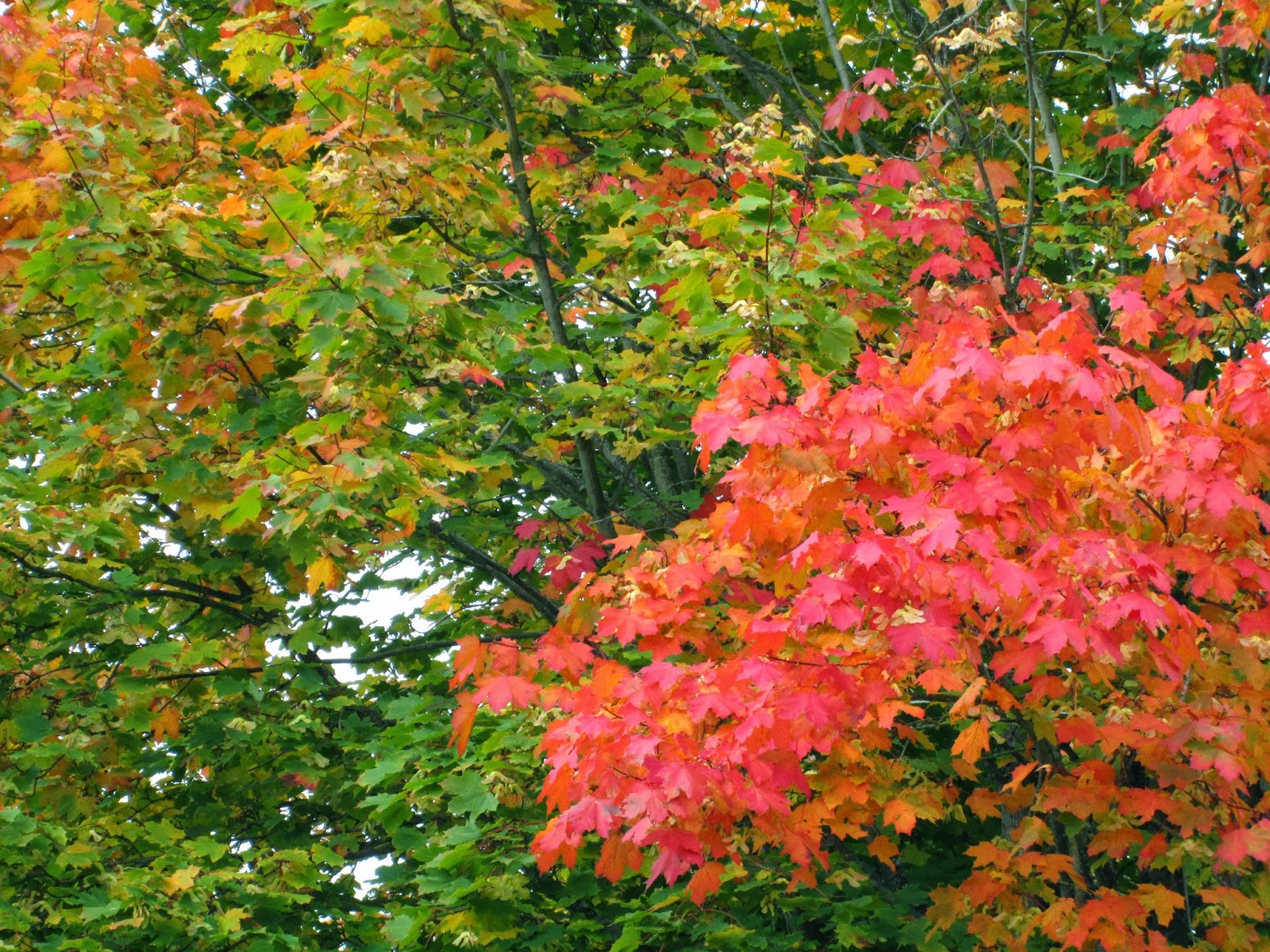
Autumn 2013

Autumn 2013
Showing posts with label pattern. Show all posts

Sunday, October 27, 2013

A chalice, a compass, a shield

Hello, everybody, and welcome to the Apple Basket!
The weather has turned from glorious sunny autumn to rainy, semi-chilly autumn – the trees are still showing their fabulous colours, though they are shedding leaves at an alarming rate. Or a rate, at least, that increases on windy days. No surprises, there, really: it is late October, so what can you expect other than rain and wind? And days growing shorter (if that makes sense).

I am busy knitting socks and more, writing, teaching, getting ready for November – all the usual, in short.

Among other activities, I’ve joined a sci-fi group on LinkedIn – and wouldn’t you know it, there’s a microstory competition running over there as well as on FWG!
The monthly deadline is on the 22nd – so this Monday, I had to decide whether I was going to participate straight away or lurk for a while before trying to answer the question: 
Can I write sci-fi?
The required elements for this month’s stories were deception and fire, the word count 600. I sat down at my laptop without a clue: no story, no idea. I typed in

sci-fi
deception
fire

An image came to me, I wrote it down; and from there, a story emerged. So a couple of hours after having nothing but the keywords, I had posted a story.
There is to be an anthology – or several, actually – of these stories; for this, one is allowed to edit the story to a maximum of 725 words. My ending could certainly use some clarification, so those extra words will come in handy.

And then, of course, I had to edit my October Skeletons story for the FWG contest to post it before the deadline on the 25th. I ended up rewriting half of it, as it was too long – 1,189 against a maximum of 1,000. It came out at exactly 1,000 words. Phew.

This microstory writing is fun. It reminds me of school assignments, except of course with a lot more freedom; but I enjoy working from prompts.
This is one reason why I have a set of Rory’s Story Cubes, the Voyages version. The set contains 9 cubes, each with 6 different images. So, you can grab three random cubes, roll the dice, and get 3 images to write from. Like this:

An elephant, a ladder, and a mushroom or toadstool.
A map, a circus tent, and two people of very different sizes.
A sunrise or sunset, a bowl of something hot (porridge? popcorn?), and a doorway.

Sometimes, the images go suspiciously well together:
Waves, a crab, and a submarine.

So far, I have only played around with these cubes – one day (ha!), I will challenge myself to write a microstory from such a roll of three dice and see what comes out of it.


We are all back at school and work, now that the autumn break is over; the count-down for the Christmas holidays hasn’t quite started yet, but it will.

I gave my students another little test this week, and thus gave myself a pile of tests to grade. That was ... interesting. Most of them still have quite some work to do, before they are ready for the exam in December; these mid-term tests are intended to help them focus on their weak points – to strengthen them, of course – and to show them the layout of the exam, so they know what to expect.
I’ll give them another one sometime during November. Mwahahahahaha ...


It’s been a long time since I last commented on podcasts; I follow quite a few, both radio produced and indie, on a number of subjects.
Recently, I was told of a new podcast called Ewe University. This is hosted by Kristine, a.k.a. halcyarn on Ravelry, a psychology professor from Illinois; she talks of knitting, sewing, and psychology at an introductory level. She does speak a bit slowly at times, but it makes for comfortable and cosy listening.

In the short story arena, I have taken up The Moth podcast again, which features real life stories told onstage. Selected Shorts pretty much speaks for itself; and I’m trying out Snap Judgment from NPR.

The complete list of my current listening choices can be found in the sidebar, and all these podcasts are available for free on iTunes.


The Knitting
I’m done with the first of the Coalminer socks for Thomas and onto the second – yay! The plan is to finish them before I’m off to England on Friday, so I am knitting along.

And the pattern is done and done, revised, edited, beta knitted by my sister, and up on Ravelry as Foot Hugger Socks. Yay again!

My Mermaid dress hasn’t seen much action; I knitted about 15 cm of it, realised I had the wrong stitch count, and frogged it. And this week I have mostly been knitting socks, so I haven’t even re-knitted the frogged part yet.
Maybe this afternoon will see some progress: it is the last Sunday of the month and thus time for my local knitting group.


My sister invited me to join a group for the knitting of hexipuffs for a Beekeeper’s Quilt for the Great Ormond Street Hospital. I have seen and heard about the Beekeeper, as has probably everybody on Ravelry, but never felt inclined to make one. It’s the same with any blanket made from many smaller parts, be it squares or hexagons or what-have-you: the barrier for me is the sewing up of the darn thing – so contributing individual hexipuffs to a joint project is a lot easier.
The required yarn is hand-dyed sock yarn. I have a bunch of half-skeins from plant dye experiments; they are too small to be useful for much and thus obvious for hexipuffs. I believe this is exactly what people do: use leftovers and scraps.


The Books
I am reading Selected Stories by Nadine Gordimer, a selection (well, obviously) of stories from five different shot story collections published over a span of several decades. These are South African stories, dealing with questions of race and apartheid – the introduction notes how the stories are dated by, among other things, the appellations for black people: are they natives, Africans, or black? – of love and loss, life and death, money and the lack thereof, identity and roles – and all of it set in the nature of the land, the veld and the city.
The stories, though separate entities each with a value of their own, blend into a picture of life in South Africa in the twentieth century, seen from a white perspective; but seeing through inconsistencies and hypocrisies.
A clear example of this is the story Happy Event, in which two women find themselves unwantedly pregnant. The white woman goes to a nursing home for a couple of days and afterwards rests to get over ‘that business’, before she resumes planning her and her husband’s trip to Europe. Her black servant gives birth alone, in secret, in the middle of the night; she is grudgingly allowed a day’s sick leave when she cannot handle the week’s laundry the next morning. She is later found out to have smothered the child and is sentenced to six months’ hard labour.

My audio book of the week has been The Sisters Brothers by Patrick deWitt, read by William Hope.
This is a Western set in 1851; Charlie and Eli Sisters – Eli is the narrator – are gunmen, killers in the employ of a shadowy figure known as the Commodore. The central job in the book is finding and killing a man who is said to have stolen something from the Commodore and is currently located in San Francisco; so the brothers travel from Oregon, where they live, towards California. On the way there, they encounter a number of more or less savoury characters, who all have an impact on the journey. And once in San Francisco, they find events turning out rather differently from what they have been led to expect.
The tone of the narrative is down-played, matter-of-fact, but thoughtful. Eli tends to ponder deeply on the nature of things; his life, his relationship with his older brother, and horses. The outdoor life of the travellers is described convincingly: nature, weather, the frailties of the human and equine body.
One thing I missed was a clue to the ages of the two brothers: they are obviously experienced in their work, and Eli in particular thinks of retiring. The reader gives Charlie a slightly wheezy voice that sounds aged to me, or worn. They are not old, though, not even middle-aged; they could be in their early thirties.
All in all, I enjoyed this book; recommended for anyone who likes a classic Western.


That’s it for this week; next week I will be posting early, on Thursday, before Andreas and I are off to Nottingham, UK, for the Black Library Weekender.
Until then: have a great week, be happy, be healthy, take care!


Sunday, October 13, 2013

Mostly Knitting

Hello everybody, and welcome to the Apple Basket!
The Autumn break is coming up, a welcome breathing space during the long stretch from August to December, between the summer holidays and Christmas. This break used to be called the ‘potato break’, because the school children had to help at home, getting the potatoes in before the frosts.
Now, it is for many families more of an action-packed week, with child psychologists cropping up every year to remind stressed out parents of stressed out kids that a few days at home, doing not much, is in fact better for everybody than running around from theme park to museum to activity.
We are taking the leisurely path, with two family outings planned and not really much besides that. The boys need to relax, sleep in, play their games – and so do I (my ‘games’, of course, are knitting and reading and writing). Weather permitting, we may decide to go and admire a stretch of forest: I am continually fascinated by the riotous colouring of trees this time of year, and I want to just soak it up before the bareness of winter.


The Knitting
This week has been good for my knitting, and I’ve managed to make quite an impact on the wips (though this form, wips, is apparently incorrect, according to a post in a discussion thread on LI – but I’ll stick with it, claiming that the acronym has become a new word in itself and thus can be pluralised).
Anyway, back to the knitting: I finished a pair of socks that I have mentioned before, but can’t show you yet; I’m hoping to have the pattern included in the next Defarge book. I won’t know until mid-November if it will be, so we’ll just have to wait and see.

I made a second cowl from my Rêveur Cowl pattern, to test it before release. It’s a deceptively simple pattern, once you get the hang of the moebius cast-on; the pattern includes a link to Cat Bordhi’s YouTube video of it. And I have had fun knitting on the same side and on both sides at once, all at the same time – this is the magic of the moebius strip. Also, it’s a quick knit using aran weight yarn on 5 mm needles.

So, the first one was the bright red one that was directly inspired by Erin Morgenstern’s book The Night Circus – highly recommended, by the way, if you like magic dreaminess in a story.
I made that one in Sandnes Kashmir Alpakka, lovely soft and warm and fuzzy – and very red.

As you may have surmised, though, red isn’t really my colour; usually, I am attracted to purples and blues and greens; and I had lying around two skeins of Filcolana Peruvian Highland Wool in a soft lavender. Hence this second, purple version: slightly smaller than the cashmere alpaca version; less fuzzy, of course, not as dreamily soft – and obviously completely unsuited for proper rêveurs.
But I like it.

And I finished my second sleeveless, top down O w l s jumper – the popular design by Kate Davies – this time also in Irish yarn. The first one was made from Kerry Mills Aran, a 200-gram skein in a tweedy dark green that my parents brought home from a trip to Ireland last autumn.
This one, in purple (yes, I know), is made in Studio Donegal Aran Tweed in a – well, a tweedy purple, with flecks of blue, lilac, heather, light grey, and once in a while an olive green.
I bought this yarn in Dublin two summers ago and have tried out several patterns for it; it didn’t want to be a skirt, though, or a shawl – but the owls jumper seems to work out. A nice addition to my work wardrobe. (No pics yet; it has been drizzling all day.)
I worked it top down again to be able to measure the body length along the way; and because it makes so much more sense to me to work from the centre out, so to speak.

On top of all this, the grey socks for Victor are coming along – the first one, anyway – and the heel is already done. From here, it’s just plain stocking stitch in the round up the leg: perfect to bring along for the guitar concert he and I are going to tomorrow evening (David Russell is performing in Den Gamle By in Aarhus).

I suppose I should mention the Leaf Cardigan, which has been sadly neglected all week. I started on one sleeve with a certain interval between the decreases that would work out if I don’t want the lace pattern on the sleeves. Then, it was put a bit to the side in favour of the O w l s and the socks, both being more appropriate for the season than a cotton cardigan. Meanwhile, I have been wavering as to the lace pattern: if I want it, I need to decrease fast enough to have the right number of stitches when there are still 40 rows to go. In that case, I have to frog the admittedly not very long piece of sleeve that I have knitted, and redo it. Decisions, decisions.
I’ll let you know what I end up doing (I think I do want the lace).


The Books
I finished The Blind Assassin by Margaret Atwood, a story of life, love, lies and secrets.
The narrator, Iris, is in her eighties, telling the story of her life and that of her sister, Laura, interspersed with comments on her daily life, of being old, of watching the changes to her home town. Inside Iris’ memoir is Laura’s novel, and inside that are several sci-fi stories told to her by her lover, stories that themselves comment upon the events happening in the world outside.

Another story featuring writers and their shaping of events is Gone Girl by Gillian Flynn, which I am listening to – this one also contains a mystery and various, conflicting, views of what has happened and why.
Nick and Amy Dunne have moved back to his Missouri hometown after both losing their New York jobs, to take care of his dying mother and demented father. Nick borrows money from Amy to buy a bar together with his twin sister. After two years in Missouri, on their fifth anniversary, Amy disappears.
The big question is, of course, whether Nick killed her. I am not going to spoil it for you; suffice it to say that both of them kept secrets.
The narrative is divided between Nick (who has the bigger parts) and Amy, with two readers in the Audible version; this back-and-forth works very well to keep the suspension tight and make the reader (listener) want to know how it all plays out.

I finally got round to finishing The Hound of the Baskervilles, the well-known Sherlock Holmes story; my plan was to re-read them all and come up with a brilliant design for the book Defarge Does Sherlock. Well, the deadline is 31st October, and I’ve read maybe a sixth of the stories so far. So, maybe not – unless I am struck by inspiration very soon.


That’s all for this time – I will be back with more knitting, more books, and an update of our autumn break activities.
Until then: have a great week – have a great break, if you have one – and take care of yourself and your loved ones!


Sunday, August 4, 2013

Publish or perish

Hello, everybody, and welcome to the Apple Basket!
This week, I plan to be completely insufferable, bragging about my accomplishments in various fields. So, consider yourself warned.

Would you believe it, it is still summer here – though what was threatening to become the driest July ever (or something) was cancelled in the nick of time, on the 30th, with thunder, rain, hail and sunshine all at once.

So, the popular saying about the weather on someone’s birthday reflecting that person’s behaviour, good or bad, during the previous year, came into effect, as Victor turned 15 that day. We agreed, though, that the bad part of it was caused by the leader of the right-wing Danish People’s Party ...
And it was still warm enough that we could sit outdoors at the restaurant in the evening, with my parents, my sister & brother-in-law, and the niblings running around.
The next day offered more rain (let’s not blame J. K. Rowling for that!) – and then Friday turned out to be the hottest day of the summer, with temperatures over 30° C in several places, and followed by what is termed a ‘tropical night’, during which the temperature does not drop below 20°. And true enough, it was 21° at 7.30 Saturday morning.

All in all, I have been practising my hot weather running – in theory, I should probably get my, um, self out of bed much earlier to run, but ... not really happening. So the Saturday morning run was tough: 22°, luckily with a stiff breeze, but still, I went in search of the shade.
I am beginning to look forward to the crisp September air – though when it comes, autumn and rain and darkness won’t be far off, so I’ll probably be grumbling about that. So it goes.


Last week, I told you about the July Short Story contest in the Fiction Writers’ Guild on LinkedIn – well, the votes have been counted, and my story came in 3rd out of the thirty stories!
That was surprising, and gratifying, and somewhat worrying; I have to ignore all that when writing next month’s story and not expect anything.
 Anyway, here it is, so you can judge for yourself:

All In A Day’s Work

I wake up soaked in sweat. The light filtering in speaks of morning, though the alarm clock by my bed insists that it is only 4:18. Nothing unusual in that: this is summer, the white nights when the sun sets for only a few hours and it never gets really dark. I struggle out of the damp, clinging sheet and push the window further open, hoping for a cool dawn breeze. But no, the air is as still and arid as it has been for several weeks now, and even the birds, normally so annoyingly bright and cheerful at this hour, seem mugged.
I decide to get in my morning run before the temperature rises any higher, so I get into the smallest possible running gear that is still decent, drink as much water as I can stomach, and set out.
I run every day; in my line of work, running is not a fashionable leisure activity, but a survival skill. I would rather not begin to count the number of times I have been saved by my ability to run away from someone or something nasty that wanted to do unspeakable things to me – and I am not being Victorian here, I really do mean unspeakable.

Quite a few other runners are out and about this early, working around the altered weather conditions.
We are all trying to adapt, Vikings getting used to a tropical life – well, not tropical, exactly, the last few winters have been exceptionally cold, with frost and masses of snow lasting well into April. Then a sudden, short spring sets in, and summer right on its heels. The meteorologists have had to come up with a new definition of ‘heat wave’; the old one consisting of three days in a row over 28° C has become a joke, when we have temperatures well into the thirties for weeks on end, months even. And droughts to rival the Australian outback.

And today is The Day, Friday the 13th of July, when everything has to be resolved or the world go to hell in a handbasket.
It is going to be a long day.

When I return, a black cat is sitting on the garden fence glaring at me. ‘Hello, Shadow,’ I say. No reply. He is understandably put out by my blatant selfishness in not feeding him before going out. I point out that he wasn’t around, but he refuses to speak to me until I have given him a whole tin of tuna.
Yes, I know, I’m a cliché: a witch with a talking black cat. So sue me.

After a cool shower and a big mug of coffee, I set about gathering the appropriate spells and ingredients for today’s work. Shadow, with the sense of occasion so peculiar to cats, paws at my knitting, but gives it up when I ignore him. I cannot be bothered about losing a woollen sock right now. The circle at the bottom of my garden needs to be fortified, so that’s where I’ll begin.
A circle of smallish granite menhirs sits unobtrusively inside a copse of oak trees, planted in concentric circles. Oaks are the strongest and most powerful of trees, drawing ancient powers from the soil and storing them in their massive boles. It is no coincidence that the Druids of Gaul and Britannia revered the oak above all other trees.
And I am going to need those powers to bind and hold the force that is causing this havoc to our climate. For I know now what it is: a Khaos being, an incorporeal will using its temporary liberty only to disrupt and destroy – not from any active malevolence or ill will towards mankind, mind you, just for the kicks.
Wearing nothing but a loose-flowing silk robe – even that feels like a fur coat today – I trace the inner circumference of the menhirs with salt, leaving a small opening. Next, I trace the outer circumference in the same manner, weaving binding spells into the lines. I place a silver bowl in the centre of the multiple circles and with my silver athame cut open my left palm. I let my blood drip into the bowl and then wrap a cloth around my hand: no drop must be allowed to fall on the ground inside or outside of the circle. I step out carefully, closing first the inner and then the outer salt circles with locking spells.
Only blood will summon the Khaos creature; salt and stone and oak will hold it.
I hope.

When I begin the summoning chant, smoke rises from the bowl of blood; wispy at first, but gradually, it grows into a thick, spiralling column, reeking darkly of gore and rot. The Khaos being resists the summoning, fights against the binding. My muscles ache, my joints feel like they are on fire. Still, I chant. The spell must not be broken before the binding is complete.
After what feels like days, the howling of the smoke subsides, and the column itself dwindles down to a puddle inside the bowl. I feel the grip on me relax, and I have to work not to sink into a puddle myself.
I tremble and then realise that it is the ground beneath me: the granite menhirs are shaken, begin to sway and then topple inwards, crumbling. All around me, the massive oaks are swaying and groaning. I manage to pick myself up and run, away from the circle, before the innermost ring of oaks creaking and cracking fall on top of the stone debris.
When the rumbling stops, a dust cloud hovers over a jumbled pile of stone and wood, slowly settling in the still, dry midday air.

Exhausted, I have another cool shower and a nap.

I wake up covered in goosebumps. A cool afternoon breeze carries the scent of rain into my room.

© 2013 Dorthe Møller Christensen


The Knitting
First, the patterns – I managed to finish Victor’s jumper in time for his birthday, and even got the pattern up on Ravelry.
 
Too hot for wool, but he performed nicely :o)
And just to continue the self-promotion: the pattern for the Elanor cardigan is finally done and published; I threw in the little hat pattern for free. Not surprisingly, the free pattern had 64 downloads after less than a day, while the paid-for cardigan had several ‘faves’ (little pink hearts), but no sales as yet.

The obvious part here is, of course, that the free stuff is downloaded more than the paid-for, not that I take the popularity of my stuff for granted.
Oh, and I don't think I've mentioned the provenance of the name: Elanor the Fair is the first-born daughter of Master Samwise Gamgee.


As far as knitting goes, I am working happily on the lace shawl I mentioned last week, while checking the written pattern and its translation for typos and correcting errors found by my sister.
It’s odd, the difference between improvising something and working from a pattern, even your own pattern: while I was making it up, it flowed organically, and I had to remember writing notes once in a while before I forgot what I had been doing. Now, I read a line in the pattern, follow that, and have to think about what is going on. Weird. But it is a pleasant knit, if I may say so myself, and soon done.

My other project right now is something for Laura, who will be 4 years old in two weeks exactly. More on this later, as always.

So, I still have a wish to decrease my number of wips; so far, I finished one thing and cast on another. And I will be casting on more things in the foreseeable future, as I will need some new nice jumpers and/or cardigans for work – that’s my excuse, anyway.


The Books
On the Forgotten Classics podcast, I am listening to The Mouse in the Mountain by Norbert Davis; this is my first encounter with the crime-fighting duo Doan & Carstairs – or whatever their agenda may actually be. The story takes place in Mexico in the 1940’s, during a sight-seeing trip to a picturesque village in the mountains; murders ensue, and it remains to be seen how the fat detective and his huge Great Dane will come out of it all.
If you like Agatha Christie mysteries and dogs, this may be something for you; Carstairs is no Scooby-Doo, though he does have a distinct personality.

Over on CraftLit, Age of Innocence by Edith Wharton is running, and I managed to get the first five episodes in at one go – I was catching up on podcasts generally after Canterbury Tales and Bleak House. The story is set in New York in the 1870’s, dealing with the rigid social structure in the upper class and the narrow circles consisting of the ‘right’ families, in which it is difficult to manoeuvre and nearly impossible to be accepted.
Wharton of course satirises over the shallow, but stern dictates of the fashion – much like Dickens does in Bleak House – and at the same time keeps a watchful and caring eye on the victims of these constraints.

By the laws of synchronicity, I have been reading about the upper spheres of another society where name, family, and fortune were all-important: ancient Rome.
One of the arguably oldest families, the Iulii, traced their ancestry back to Iulus, the son of Aeneas and Lavinia, Aeneas being himself the son of the goddess Venus. Quite a pedigree.
And the most famous of all Iulii was, of course, Gaius Iulius Caesar, who in 44 BCE was murdered for – maybe – wanting to be king. He did draw a worrying large number of offices and thus a large amount of power into his one person, political, administrative, military, and religious power; the senate and the people bestowed honours on him that befitted a god, and even though he – in a possibly staged display – refused the crown, he did wield all of the might of a monarch. So they killed him, to save the res publica, and what they got was chaos, civil war, and an emperor. So it goes.
Anyway, I have been reading Caesar by Peter Ørsted. Caesar is, of course, always hugely interesting, whether you like him or not; he must have been a fascinating person, charming and scary at the same time.
But this book, not so much. No doubt a lot of research has gone into it: we get the history, the wars and politics, the system, and lots of quotes from ancient historians and philosophers, including Cicero and Caesar himself.
I found the tone too familiar; biography writing is always personal, of course, since the biographer needs must find the subject interesting, whether in a positive or a negative way. In this case, though, the writer is too present; mostly so in the prologue that takes place in a small town in Spain to which the writer has travelled in Caesar’s footsteps. Scattered throughout the narrative are a lot of personal reflections, too many I thinks – if you want to do that much conjecture, write a novel. Really. And it seems somehow at least one round of editing was forgotten.
So: great man, not so great book.

Nevertheless, I felt inspired to re-read Colleen McCullough’s series Masters of Rome, beginning with The First Man in Rome – who is not Caesar, but his uncle Gaius Marius. (Note the absence of a third name, a cognomen: Marius was a nobody, a homo novus, and one of the very, very few of the kind to achieve the highest post in the Roman magistracy and become consul. So, not really a nobody, only in the sense of not belonging to one of the ancient families.)
I have recommended this series before; here, we do have the novel writer’s approach and freedom to imagine thoughts, feelings, and motivations. I ought to mention that McCullough is pro-Caesar: the nasty rumours about his sexual proclivities – which were probably true – and his attitude to world domination are all explained in a positive light.

I finished also The Gallows Curse by Karen Maitland; the narrator is a female mandrake, which already gives you an inkling of what to expect. The story, set in mediaeval England – Norwich in 1210 – is a whodunit, a spy thriller, and a love story, with elements of the grotesque and the supernatural. Great fun.

The Night Bookmobile by Audrey Niffenegger is a graphic novel, or rather novella, based on a short story about a young woman who by chance encounters a bookmobile in the night streets of Chicago. I gave it to my sister for her birthday, having found it on her amazon wishlist and knowing how she loved Her Fearful Symmetry and The Time Traveler’s Wife; and she kindly let me read it, too.
The young woman in the story, Alexandra, finds that the books in this particular bookmobile are all the books she has ever read, including her own diary; and after being shooed out at dawn (it is a night bookmobile, after all), she searches for the bookmobile again to return and preferably stay there, among the shelves of books, the familiar smell of paper and dust – and a bit of wet dog.
I won’t spoil the story by telling you anymore, but I will recommend it.

Embarking on this book, as with every other book, I went to goodreads to place it on my virtual book shelf, among all the other books that I have read; for that is the function of these virtual libraries, isn’t it, to let us imagine walking between rows of shelves of books, smelling the paper and the dust, and the whiff of wet dog. Now, all we need is a plug-in to this particular corner of the Matrix, and all would be well.
Or not.


Well, that’s it for this week – I do hope you are enjoying your summer (or winter, if you are of the southerly persuasion). I will be back next week, and until then: keep happy, keep healthy, keep crafting!


Sunday, March 3, 2013

Marchin' along


Hello, everybody, and welcome to the Apple Basket! I hope you have had a great week; my week has whooshed by and now all of a sudden, it is Sunday again.
The sun is shining and actually warming everything; it feels like spring is around the corner – and my laundry is drying outside and not in the dryer! That I have been waiting for; the clothes become so much nicer and fresher, and I much prefer using the wind and sun rather than electricity.
Now that the big stuff is dealt with (lol), let’s get on to today’s business: we have a bit of literary history – no, don’t go away, it is quite interesting – and, of course, the knitting talk.


The Apple of the Week:

I am currently working with Jason and the Argonautika; hence the tale from last week, and hence this week’s offering, as well. ‘My’ version of the epos is the Hellenistic one, written by the scholarly poet Apollonius of Rhodes, who worked at the great Library in Alexandria in the 3rd century BCE.
The story of Jason and his quest for the Golden Fleece is ancient, at least as old as the other big compendium of sailors’ yarns that we know of, the Odyssey. And like the stories in the Odyssey – and the Iliad, for that matter – this story was told orally, by professional story tellers, for centuries before ever being written down. In fact, the Greeks had no alphabet with which to write their stories until about the middle of the 8th century BCE; and the war with Troy depicted in the Iliad took place around 1200 BCE. Quite a gap, in which the story can unfold and be embellished.

To recap: the Iliad tells of a war in which a band of Greek kings and noblemen (and their soldiers, who are incidental to the story, if not the battle) lay siege to and finally, after ten years, conquer the city of Troy, situated by the Hellespont in modern-day Turkey. This is an epic tale of battle and loss, of the horrors of war to the civilian population and to the warriors themselves; there are good guys as well as bad guys on both sides of the conflict. And tragic love stories.
After the war, the Greek kings sail back to their homelands and their families; the Odyssey tells of Odysseus, whose voyage back to Ithaka ends up taking ten years – on top of the ten years he spent at Troy. So this story is of a boy trying to become a man without ever having known his illustrious father: Odysseus’ son who was newborn when he went away. And a wife who is deemed a widow and pressed to remarry. And a man who just wants to go home instead of spending eternity with a sexy goddess. For the fun of it, we get a bunch of tall tales about sea monsters and man-eating giants and whatnot; everything there to explain how Odysseus managed to lose the 600 men he had with him when he left Troy.
The Argonautika is the story of a boy who goes out to slay the dragon, win the treasure and the princess, and return home a man. And we get the sailors’ yarns as well: some of the same places are visited by both Jason and Odysseus. This story takes place about a generation before the war at Troy: the fathers of several of the heroes we know from the Iliad, are part of the crew on the Argo; among them Peleus, the father of Akhilles.

All of these stories were well-known to the Greeks, both audience, story tellers, writers, playwrights, and eventually readers. Parts of stories and back stories were utilised when the theatre was invented in the 6th and 5th centuries BCE; these tragedies worked much as modern day film versions of fairy tales: everybody knows the story and how it ends, and so the interesting part is how it is going to be told this time, what spin will be put on it.
And so, when Apollonius gets his hands on the story in the 3rd century BCE, he knows that his readers will know it well: everybody knows the Homeric epics and the tragedies and the other poems, including those that have since been lost. Everybody knows what happens after the events of the quest; when Medea is being all girly and weepy, it is supposed to creep you out, because you know that later, she will murder her own children to get back at Jason for dumping her.
It’s like with the Star Wars films: when Obi-Wan Kenobi casually says to Anakin ‘You’re going to be the death of me’ in film no. 2, Attack of the Clones, it works because everybody has known for decades that Anakin as Darth Vader will actually kill Obi-Wan in film no. 4, A New Hope.

So, Apollonius can put his own spin on a classic heroic tale, adapting it to the modern tastes. And Hellenistic tastes were surprisingly modern: this version of Jason is reluctant to be a straight-up hero and a leader, he is regularly assailed by doubts and fears, he prefers to charm and persuade and to use his sex appeal to further his cause.
Added to that, it is clear that the voyage and the quest is the result of a group effort rather than of one man directing his minions. Odysseus is without doubt the leader of his men, the one who thinks and comes up with solutions – and the only one who survives.

That approach doesn’t work anymore in the Hellenistic world: the Homeric heroes are all upper class, Bronze Age noblemen, and the common soldiers are largely ignored or at least unnamed. The 6th and 5th century tragedies performed in the young democracy of Athens feature kings and noblemen from ancient stories, much like our fairy tales; but the morale of the tragedies affects everybody, and they often deal with dilemmas faced by ordinary citizens, such as the conflict between loyalty to the state and loyalty to the family or, if you wish, clan.
In the time of Apollonius, people are no longer participants in the rule of a city state, a polis, they are subjects under a king who may be quite distant, both geographically and socially; and so, the ability to cooperate and function in a group is stressed. Jason could never have gone it alone; he relies on the skills and support of his crew – who even, at the outset, did not look to him as leader. They chose Herakles, the mighty hero, who politely declined the honour and effectively made the others accept Jason for the job.
So it goes.


The Knitting:

I feel like the Blues Riffs socks should be renamed the Forever Socks – or maybe, in keeping with the music theme, The End Socks after the (ironically) interminable song by The Doors.
It has taken me more than a month to complete the first sock, frogging or rather tinking back in three places: on the foot below the gusset, the entire heel, and a bit on the leg. And that was after I re-knit the toe on smaller needles to get my stitch gauge right.
Going through the project gallery for this pattern, the Riff Socks by Lise Brackbill, on Ravelry, I found that I am not the only one with problems here: many comments include phrases like ‘the heel is huge’, ‘turned out too big’, ‘had to rip back / pull out / frog’. So, apparently, the designer’s gauge, particularly the row gauge, is tighter than most knitters’. Something to be aware of: the row gauge is quite important with these socks.
Anyway, on Thursday I cast off the first sock and tried it on Victor’s foot – and it fits perfectly! Oh, the relief and joy. He didn’t want to take it off again. And it is a very handsome sock – which of course is why I am knitting them in the first place – the diamonds formed by the twisted stitches running up the sock are elegant, and the X on the back of the heel seems to hug his Achilles tendon (and it does need a bit of TLC right now: he just took up running).


Having been plugging along on the same three projects for what feels like weeks and weeks, I really need to finish something. And to start something new: I am getting fed up with my projects page on Ravelry looking the same every time I open it – which I do daily, as if it may have magically changed since yesterday ... like the new brilliant feature, the Patterns Highlights page with all the new stuff that you may enjoy. I love this – in the same way that I love a box of chocolates: sweet, sweet temptation combined with a severe test of my abilities to prioritise and restrain myself.

So I decided to focus on the Splendid Striped Cowl by the lovely Martine of the iMake podcast and get it off the needles. It is a good take-along knit: it takes next to no concentration and is quick to stuff back in the bag, sitting as it is on just a circular needle (not like a handful of dpns that need to be organised and secured), so a couple of waiting rooms and a couple of episodes of The Wire later, the knitting part was done. Unpicking the provisional cast-on, grafting the ends of the strip, and weaving in yarn ends got done in between other stuff. And voila! a lovely, warm cowl.

Of course, the weather is beginning to resemble spring right now; a lot of it is due to the light returning, which I always really feel around my birthday. This doesn’t mean, though, that it’s not still cold outside, and it may well stay cold for another month. So, woolly knits are still quite relevant to my quality of life.

After getting the Splendid Cowl out of the way (this is sounding like I don’t like the cowl, but I do!), I could return to the sleeve of the Juniper jumper (try saying – or typing – that ten times fast!), that was sitting around moping and feeling neglected.
A guitar café concert on Thursday evening got the sleeve moving along – and reminded me that I had been working on the body of that same jumper during the Wayne Siegel concert exactly two weeks previously. Yikes.
Tip of the Day: do not leave unfinished projects lying around for weeks, if you want to feel like you are accomplishing something.
Having nearly finished the first sleeve, I realised something that I should probably have thought of earlier: as I am working with a sport weight or light DK yarn (the Rowanspun DK) on a pattern that is written for a worsted weight, my row gauge obviously does not match the presumed gauge. So, my intervals between decreases down the sleeve (12 rounds, as stated) are smaller than they are supposed to be. I tried the jumper on at once – and luckily, it was okay. The sleeve fits nicely; it is a bit snug, but then, I find floppy sleeves annoying and impractical, so all is well on that front.
And I am now working on the second sleeve ... the end is in sight.

My Pomona, the pattern for which is now up on Ravelry.
Not surprisingly, I have a gazillion projects that I want to cast on, both winter stuff and summer stuff; this time of year it becomes really difficult to decide what to knit. The sunshine calls for lacy cotton or bamboo cardigans; the temperature says socks and that hat I was contemplating. Maybe I could do one of each in parallel ... hmm, that’s an idea. We’ll see.

So, that’s it for this week – I am going out for a walk in the lovely sunshine :o)
I hope you have a wonderful week, be it spring-like or not in your region. Keep happy, keep healthy, keep crafting!